The Margin Leak Hiding in Your Receiving Dock
You are losing money before a single cover sits down. The loss is happening on the invoice, line by line, at the receiving dock, on products you already negotiated a price for.
You are losing money before a single cover sits down. The loss is happening on the invoice, line by line, at the receiving dock, on products you already negotiated a price for.
In brief: Invoice price variance is the gap between what a supplier agreed to charge and what actually appears on the invoice. The Spread, Supy's 2026 report on 93 million data points, analyzed across 27 million invoice lines, found that a significant share of invoices contained at least one line billed above the agreed contract price — and that many of those overages were substantial relative to the negotiated rate. For a multi-unit operator running tight food cost targets, this is not a rounding error; it is a structural problem that compounds across every location, every week, every period close.
---
What Invoice Price Variance Actually Is
Invoice price variance is the difference between the price recorded in your purchase order or supplier contract and the price that appears on the invoice you actually pay.
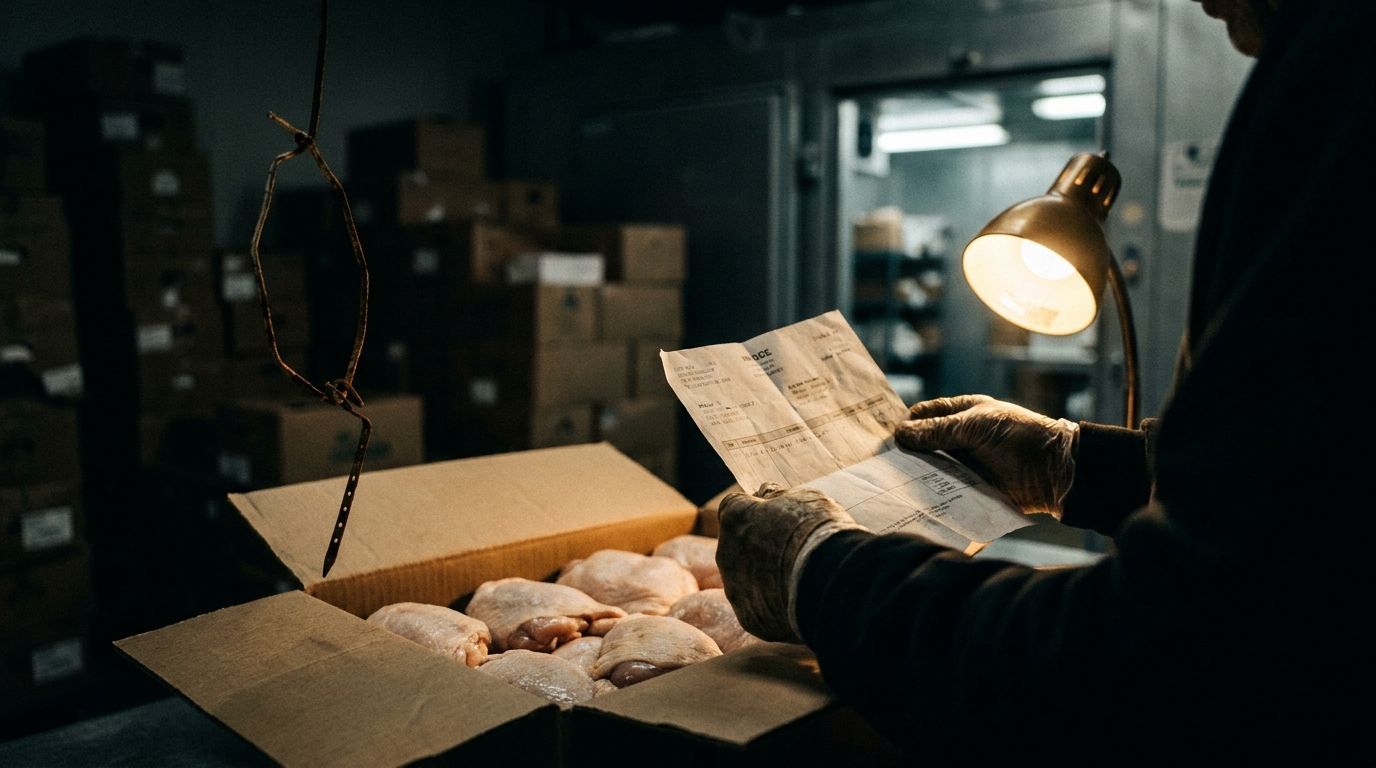
It sounds administrative. When your agreed price on a case of chicken thighs is $42 and the invoice says $51, you just paid 21 percent more than you budgeted. Multiply that across a 10-location group with daily deliveries from three or four broadline and specialty distributors, and the number stops being a line-item curiosity and starts being the reason your food cost percentage is running above where your menu math says it should be.
This stays hidden for a structural reason. Most receiving processes are built to verify quantity, not price. Your receiver is checking that 4 cases arrived, not that the price per case matches what your purchasing manager negotiated last quarter.
---
The Scale of the Problem Is Bigger Than Most Operators Assume
The Spread, Supy's 2026 analysis of 93 million data points across 27 million invoice lines, found that a meaningful share of invoices contained at least one overcharge on a contracted item, and that many of those overcharges were not minor. The report is worth reading in full to see the frequency and severity figures that apply to your category mix; what it documents is a recurring, structural issue rather than an occasional data-entry mistake.
Severity matters as much as frequency. Overages on proteins, dairy, or specialty produce, categories where you are likely running negotiated pricing precisely because the spend is high, move your food cost in a way that no amount of portion discipline recovers.
The Spread also found that volume purchasing delivers inconsistent price protection at the invoice level. Across restaurants purchasing the same product from the same supplier in the same month, the larger buyer paid less only 43.3 percent of the time and paid more 33.9 percent of the time. Volume leverage matters in contract negotiations, but those negotiated rates are not reliably reflected in the invoices that actually get paid.
For a multi-unit operator, this compounds. If you have 8 locations each receiving 5 deliveries a week, you are processing roughly 160 to 200 invoices every 7 days. At whatever your actual error rate turns out to be, a meaningful number of those invoices likely contain at least one overcharge, and the report's findings suggest that most operators are not catching them before payment clears.
---
Why Your Current Process Does Not Catch This
The gap between what you negotiated and what you paid does not surface in most operator workflows because the systems handling receiving and the systems handling invoice approval are rarely talking to each other in real time.
Your receiver logs the delivery. Your bookkeeper or AP clerk processes the invoice. Your purchasing manager holds the contract. In a 2-to-5-location operation, those might be three different people who never sit in the same room at the same time. In a 10-to-20-location group, the problem scales with the org chart.
Timing is the other factor. By the time you close the period and reconcile food cost, the invoices from week one are already paid. You can identify the variance in retrospect, but recovering it from a supplier requires documentation, a paper trail, and a conversation that most operators do not have the bandwidth to have 40 times a week.
This is also why menu-level audits, while useful, do not solve the problem. You can engineer the perfect plate cost, price it correctly against your comp set, and still run food cost above target because the inputs you priced against are not what you are actually paying. The invoice-level data operators need to protect margin sits upstream of the menu, not inside it.
---
What Catching It Actually Requires
The fix is straightforward in concept, though most operations are missing at least one of the three things required to make it work.
Contracted prices need to live somewhere accessible at the point of invoice receipt, not in an email thread from six months ago or a spreadsheet your purchasing manager maintains on their laptop. Every invoice line needs to be checked against that contracted price before payment, because the leverage to dispute an overcharge disappears once the check clears. And variances need to be flagged and routed to someone with authority to dispute them, with the documentation already attached. A receiving clerk cannot do this. A GM with 12 other fires burning cannot do this consistently. It needs to be a process with defined ownership, not a task that falls to whoever notices the number looks off.
The operators who are catching this are applying the same discipline to purchasing that they already apply to labor scheduling: set the standard, measure against it in real time, act on the gap before it closes.
---
The Competitive Reality
Your comp set is dealing with the same supplier base, the same invoice volume, and the same receiving constraints you are. Most of them are managing food cost as a percentage after the fact, adjusting menu prices when the number gets uncomfortable, and absorbing the variance as a cost of doing business.
Closing this gap builds a cleaner picture of true input costs. Menu pricing decisions, contract negotiations, and food cost targets all become more accurate when they are built on verified invoice data rather than blended actuals with undetected price variance folded in. Operators who know their invoice variance rate are negotiating from a position of documented fact; operators who have never calculated it are negotiating blind.
---
Frequently asked questions
What is invoice price variance in restaurants?
Invoice price variance is the difference between the price a supplier agreed to charge, as recorded in a purchase order or contract, and the price that appears on the actual invoice. In restaurants, it most commonly occurs on contracted items like proteins, dairy, and produce. According to The Spread, a 2026 analysis of 93 million data points across 27 million invoice lines, invoice price variance is a recurring, structural issue — the report documents both the frequency and severity of overcharges on contracted items.
How much money do restaurants lose to invoice overcharges?
The scale depends on invoice volume and average order size, but the frequency documented in The Spread is significant enough that multi-unit operators should treat this as a structural cost rather than an occasional error. The report found that a meaningful share of invoices contain at least one overcharge on a contracted item, and that many of those overcharges are substantial relative to the negotiated rate. For a multi-unit operator processing 150 to 200 invoices per week, even a modest error rate translates to dozens of overcharged invoices every week, most of which are paid without being caught.
Does buying in bulk protect restaurants from invoice overcharges?
Not reliably. Data from The Spread found that across restaurants buying the same product from the same supplier in the same month, the larger buyer paid less only 43.3 percent of the time and paid more 33.9 percent of the time. Volume leverage exists in contract negotiations but does not consistently appear on the invoices that actually get paid.
Why do restaurant operators miss invoice price variances?
The receiving process is built to verify quantity, not price. The people who receive deliveries, process invoices, and hold supplier contracts are often different people operating in different systems with no real-time connection between them. By the time a period closes and food cost is reconciled, the invoices are already paid and the window to dispute them has narrowed significantly.
How should a multi-unit operator start auditing invoice price variance?
Start by pulling 30 days of invoices and comparing line-item prices against your current contracted rates for your top 10 spend items. Proteins, dairy, and oils are the highest-leverage categories because the dollar amounts are largest. Identify the gap, quantify it as a percentage of total purchases, and then build a pre-payment check into your AP process. The goal is catching variances before the invoice is paid, not reconciling them after the period closes.