Your Grocery-Buying Guests Are About to Feel the Gap, and They'll Feel It at Your Table
You've been watching your food costs, adjusting your prices carefully, and trying not to spook the guests who are already counting dollars before they walk in. Now there's a new pressure coming that has nothing to do wi
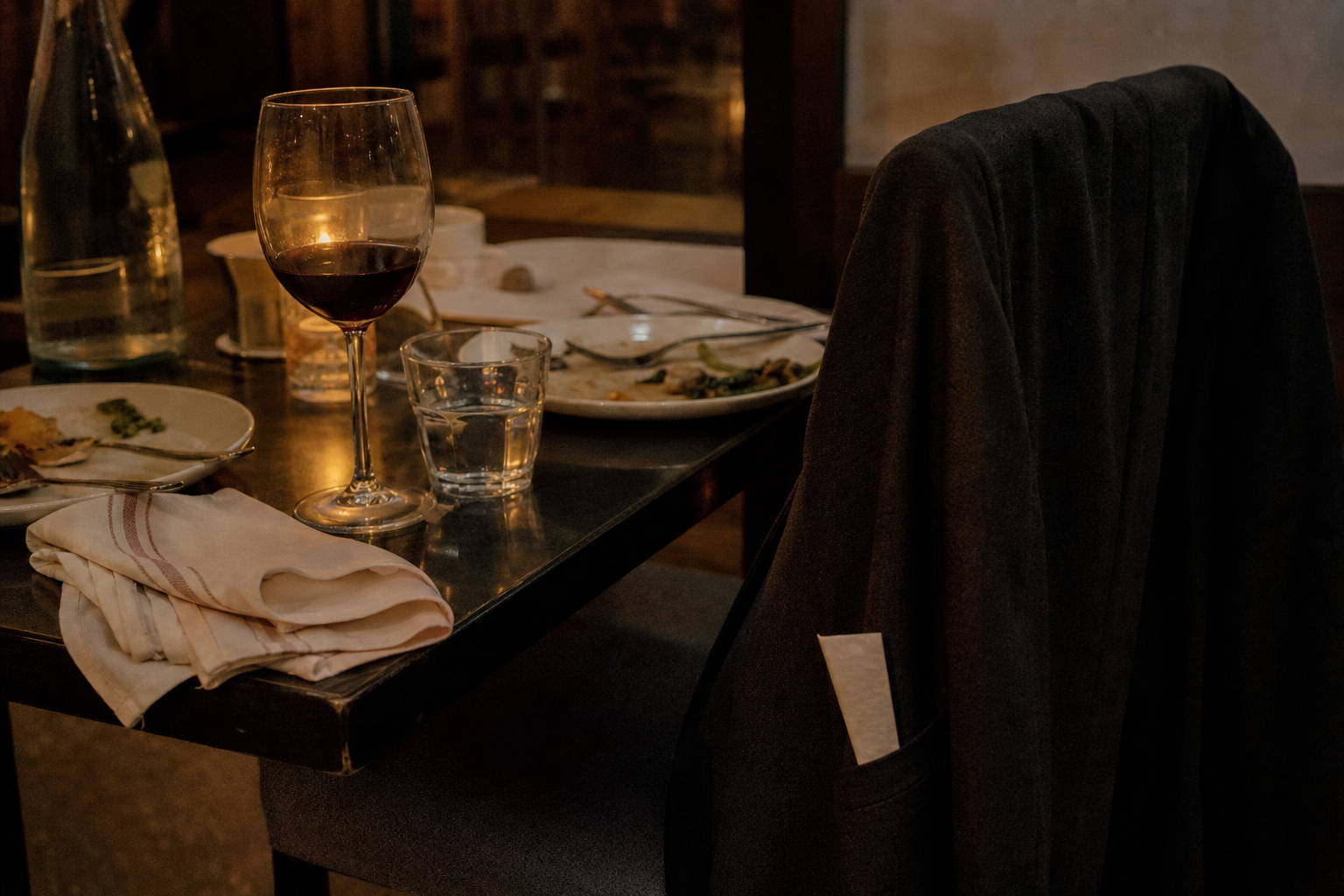
You've been watching your food costs, adjusting your prices carefully, and trying not to spook the guests who are already counting dollars before they walk in. Now there's a new pressure coming that has nothing to do with your kitchen or your suppliers: grocery prices are falling, and restaurant prices are not falling at the same speed. That gap is going to show up in your guests' heads every time they decide whether to eat out or stay home.
In brief: Restaurant menu prices were up 3.4% year over year as of June 2026, while grocery inflation has been moderating faster, creating a widening value gap in consumers' minds. This gap is structural, not accidental: restaurants carry fixed labor costs, lease obligations, and supply chain contracts that prevent prices from falling as quickly as retail food prices. Operators who understand why the gap exists can make smarter decisions about where to hold, where to trim, and how to frame value before guests start making the comparison out loud. The operators who see this coming now are the ones positioned to act before their nearby competitors do.
---
Why Restaurant Prices Fall Slower Than Grocery Prices
The restaurant-versus-grocery inflation gap is the difference between how fast food prices fall at the supermarket versus how fast they fall on a restaurant menu, and it exists because the cost structures of the two businesses are almost nothing alike.
When commodity prices drop, a grocery store can pass that savings to the shelf within days. Their main cost is the product. Your main cost is the product plus the people who prepare it, the lease on the space, the utilities, the equipment, and the dozens of other fixed and semi-fixed expenses that do not move when egg prices fall. So even when your ingredient costs ease, your total cost structure stays elevated, and your menu prices have to carry all of it.
According to The Future of Things, citing National Restaurant Association data from the Bureau of Labor Statistics, restaurant menu prices were up 3.4% year over year as of June 2026, the slowest annual pace in seventeen months. Full-service restaurants were running a bit hotter at 3.7%, and limited-service at 3.1%. That slowdown sounds like progress, and it is. But if grocery inflation is falling faster, the consumer's mental math is still moving against you.
---
The Guest Is Already Doing the Math
Guests do not compare your prices to last year's prices. They compare your prices to what they just paid at the grocery store. That comparison is happening in real time, and right now it is getting less favorable for restaurants.
Revenue Management Solutions reported that quick-service restaurant traffic was down 1.4% year over year in July 2026, even as net sales were up 1.4%, because average prices were up 2.3%. Sales numbers that look fine on paper can mask a guest count problem underneath. If you are running more sales dollars on fewer guests, you are not growing. You are extracting more from a shrinking base, and that base is exactly the group most sensitive to the grocery comparison.
This is the quiet version of the problem. Your sales report looks acceptable. Your guest counts are sliding. And the reason is not that your food got worse; it is that the value equation shifted in the consumer's mind without anything changing on your end.
---
Why Nearly Half of Operators Already Stopped Raising Prices
The operators who are paying attention have already adjusted their posture. According to QSR Magazine, citing Restaurant365's 2026 State of the Restaurant Industry Mid-Year Report, 48% of operators stopped raising menu prices in 2026. That is not a coincidence. It reflects a real read on where consumer tolerance is, and it lines up directly with the traffic data showing that price increases are now costing more in guest counts than they are returning in margin.
The operators still raising prices are betting their guests will absorb it. Some will be right. But the ones who understand the grocery gap are making a different bet: that holding prices steady, or selectively trimming on high-visibility items, buys them guest loyalty at exactly the moment when nearby competitors are still pushing prices up.
Here is how the approaches compare:
- Continue raising prices across the menu: Protects margin per order in the short term, but accelerates guest count erosion as the grocery gap widens; works only if your concept has strong loyalty or limited nearby competition.
- Hold prices flat while absorbing cost increases through sourcing and portion discipline: Preserves guest counts and value perception; requires tighter operational control and may compress margin temporarily.
- Selectively lower prices on high-visibility, frequently ordered items: Sends a clear value signal without cutting margin on the full menu; requires knowing which items guests use as their mental price benchmark.
- Reframe value through portion size or bundling rather than price cuts: Avoids the optics of a price reduction while improving the perceived deal; can backfire if guests notice portion changes before they notice the value.
---
What the Structural Gap Means Going Forward
The USDA's long-range food price outlook has consistently shown that grocery prices respond faster to commodity swings than restaurant prices do. That is not a flaw in the restaurant model; it is just the math of a business where labor is a large share of revenue and leases run five to ten years. You cannot reprice your lease when wheat gets cheaper.
What this means practically is that even in a favorable commodity environment, your menu prices are unlikely to fall at the same rate as grocery prices. The gap may not be dramatic in any single month, but it compounds in the consumer's memory. Every grocery trip where they notice their bill is lower is a small data point that makes your menu price feel a little less reasonable.
MarketPulse's rolling price index, built on nearly 250,000 price points across more than 19,000 restaurants, shows how much variation exists across categories and regions. The operators watching that kind of data at the category level, not just the total-menu level, are the ones who can identify which parts of their menu are most exposed to the grocery comparison and act on it before the guest count data tells them they waited too long.
Understanding how restaurants are tracking competitor pricing and consumer behavior in real time is increasingly the difference between operators who see this shift coming and those who read about it in their quarterly numbers.
---
The Takeaway for This Week
The grocery-versus-restaurant inflation gap is not a marketing problem. It is a pricing strategy problem, and you can get ahead of it right now while most of your nearby competitors are still watching their sales totals and missing the guest count signal underneath.
Pull your guest count trend for the last six months separate from your sales trend. If sales are up but guest counts are flat or down, you are already inside the gap. The guests who are leaving are not going to a competitor with better food; they are going to a grocery store with a lower bill.
The operators who act on this in the next few months, before grocery deflation becomes a dinner-table conversation, will be the ones holding their guest counts when everyone else is wondering where they went. You now have the data to be one of them. Most of your competitors do not yet.
---
Frequently asked questions
Why are restaurant prices falling slower than grocery prices in 2026?
Restaurant prices fall slower than grocery prices because restaurants carry large fixed costs, including labor, leases, and equipment, that do not drop when commodity prices ease. A grocery store's main cost is the product itself, so it can pass savings to the shelf quickly. A restaurant has to cover its full cost structure with every menu price, which means even when ingredients get cheaper, the menu price cannot fall at the same rate.
What is the restaurant-versus-grocery inflation gap?
The restaurant-versus-grocery inflation gap is the difference in how fast food prices fall at supermarkets compared to restaurant menus. It exists because the two businesses have fundamentally different cost structures. As of June 2026, restaurant menu prices were still up 3.4% year over year, while grocery inflation has been moderating faster, making the value comparison increasingly unfavorable for restaurants in consumers' minds.
How does falling grocery inflation affect restaurant guest counts?
When grocery prices fall while restaurant prices hold steady, guests recalibrate their sense of value. They are not comparing your prices to last year; they are comparing them to last week's grocery bill. This tends to reduce how often they choose to eat out, which shows up as falling guest counts even when total sales dollars look acceptable because higher prices per order can mask the traffic decline.
Should I cut my menu prices if grocery prices are falling?
Not necessarily across the board. The more targeted approach is to identify the items guests use as their mental price benchmark, often the most frequently ordered or most visible items, and consider holding or trimming those while protecting margin elsewhere. Cutting prices broadly without a cost basis to support it creates a different problem. The goal is to close the perceived value gap, not to match grocery store economics you cannot replicate.
What percentage of restaurant operators stopped raising prices in 2026?
According to Restaurant365's 2026 State of the Restaurant Industry Mid-Year Report, cited by QSR Magazine, 48% of operators stopped raising menu prices in 2026. This reflects a broad recognition that consumer price tolerance has reached a ceiling, and that further increases are more likely to cost guest counts than to protect margins.
---