Your Kiosk Is Your Fastest-Growing Register. Are You Treating It Like One?
You already know your dining room is quieter than it used to be. You've watched the shift happen table by table, daypart by daypart.
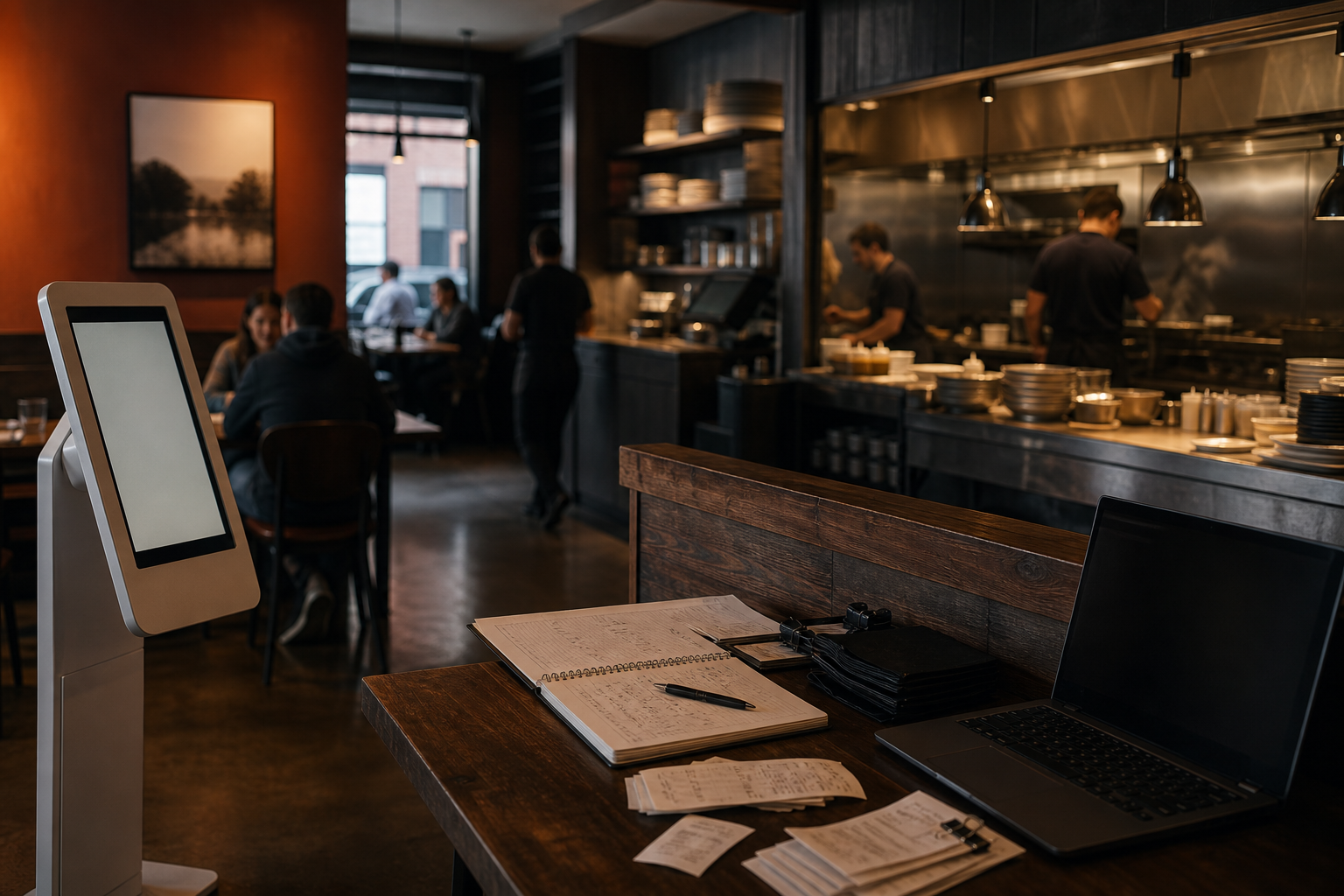
You already know your dining room is quieter than it used to be. You've watched the shift happen table by table, daypart by daypart. What you might not have clocked yet is where that volume actually went — and more importantly, whether your pricing and channel architecture followed it there. PAR's latest data puts a number on what you've been feeling: kiosk transactions are up 35% year-over-year, and delivery checks are running 78% higher than in-store averages. That's not a rounding error. That's a structural change in how your guests are choosing to spend money with you.
The operators who are winning right now aren't the ones with the fanciest tech stack. They're the ones who looked at that data and asked a harder question: is my menu, my pricing, and my upsell logic actually built for the channels where my guests are spending the most? If you run two to twenty locations, the gap between a well-configured channel mix and a neglected one isn't a marketing problem — it's a margin problem. Here's how to audit where you stand.
The 35% Kiosk Growth Number Means Your Upsell Logic Is Either Working or It Isn't
A kiosk doesn't get tired at the end of a lunch rush. It doesn't forget to mention the side upgrade. It doesn't skip the dessert prompt because the dining room just filled up. That consistency is exactly why kiosk transaction volume is climbing — but it's also why a poorly configured kiosk is a faster way to leave money on the table than a distracted cashier ever was.
When kiosk traffic grows 35% and your average kiosk check isn't growing with it, that's your signal. Pull your kiosk average ticket and compare it against your counter average for the same daypart. If kiosk isn't running at least 10-15% higher, your modifier flow and upsell sequencing need a hard look. The machine should be outperforming your best cashier on attachment rate — not matching your worst one. Check whether your most profitable add-ons (beverages, premium proteins, desserts) are surfaced early in the ordering flow or buried after the guest has already mentally closed out the transaction. Sequence matters more than most operators realize, and most operators set it once at launch and never touch it again.
A 78% Delivery Check Premium Is a Pricing Signal, Not a Coincidence
Delivery guests are spending 78% more per order than in-store guests. Read that again. That's not because they're ordering for groups every time — it's because the delivery context removes friction from high-dollar decisions. There's no line behind them. There's no cashier making them feel rushed. They're browsing at home, often hungry, often ordering for multiple people, and they're not anchoring on your lowest price point the way a quick-service counter guest might.
If your delivery menu is a straight copy of your in-store menu with the same prices, you are actively underpricing into your highest-check channel. Delivery guests have already accepted a service fee and a delivery fee — their price sensitivity at the item level is lower than you think. That doesn't mean you gouge them. It means you build a delivery-specific menu architecture that leads with your highest-margin, highest-satisfaction items, prices proteins and premium builds to reflect the channel's economics, and removes the low-margin, low-ticket items that drag your average down without adding operational value. Your delivery menu should look like it was designed for delivery. Right now, for most operators, it looks like an afterthought.
Your Channel Mix Is a Pricing Architecture Problem, Not a Marketing Problem
Here's the audit most multi-unit operators haven't run: take your total transaction volume and break it down by channel — dine-in, counter, kiosk, delivery, catering if applicable — then map your average check and your gross margin by channel. Not revenue. Margin. You will find that your channels are not performing equally, and more importantly, you'll find that your pricing doesn't reflect that inequality at all.
Delivery has the highest check but also the highest cost-to-serve. Kiosk has growing volume and lower labor cost per transaction. Dine-in has the highest hospitality overhead. Each of those channels deserves its own pricing logic, its own menu curation, and its own upsell architecture. The operators who treat all three as the same menu at the same price are essentially running a flat tax on their own margins — subsidizing their most expensive channel with revenue from their most efficient one. Once you see your channel economics laid out side by side, the pricing decisions become obvious. The hard part is just doing the work to see them clearly.
The Benchmark That Actually Matters for Your Comp Set
You're not competing against the industry average. You're competing against the two or three operators in your market who are running similar concepts at similar price points. But industry benchmarks like PAR's 35% kiosk growth and 78% delivery check premium give you a calibration point — a way to know whether your numbers are in the right zip code or whether you're operating with a structural disadvantage you haven't named yet.
If your kiosk volume is growing but your kiosk check is flat, you have a configuration problem. If your delivery check is running below that 78% premium benchmark, you have a pricing architecture problem. If you don't know your channel-level check averages off the top of your head, you have a visibility problem. None of these are fatal. All of them are fixable. But you can't fix what you haven't measured, and you can't measure what you haven't decided to look at.
The Takeaway
The channel shift is already done. Your guests have already voted with their behavior — kiosk and delivery aren't emerging trends, they're your current reality. What's still up for grabs is whether your pricing, your menu architecture, and your upsell logic are actually capturing the spend that's moving through those channels. Pull your channel-level check averages this week. Compare them against the benchmarks. Find the gap. That's where your next margin point is hiding — not in a cost-cutting exercise, not in a new marketing campaign, but in the channels you're already running that aren't working as hard as they could be.
You now know what your comp set probably doesn't: the operators who win the next two years won't be the ones who added kiosks. They'll be the ones who actually configured them to perform.