Your Receiving Team May Be Missing Invoices With Overcharges
Your receiving staff are doing their jobs. They check deliveries, sign off on invoices, move on.
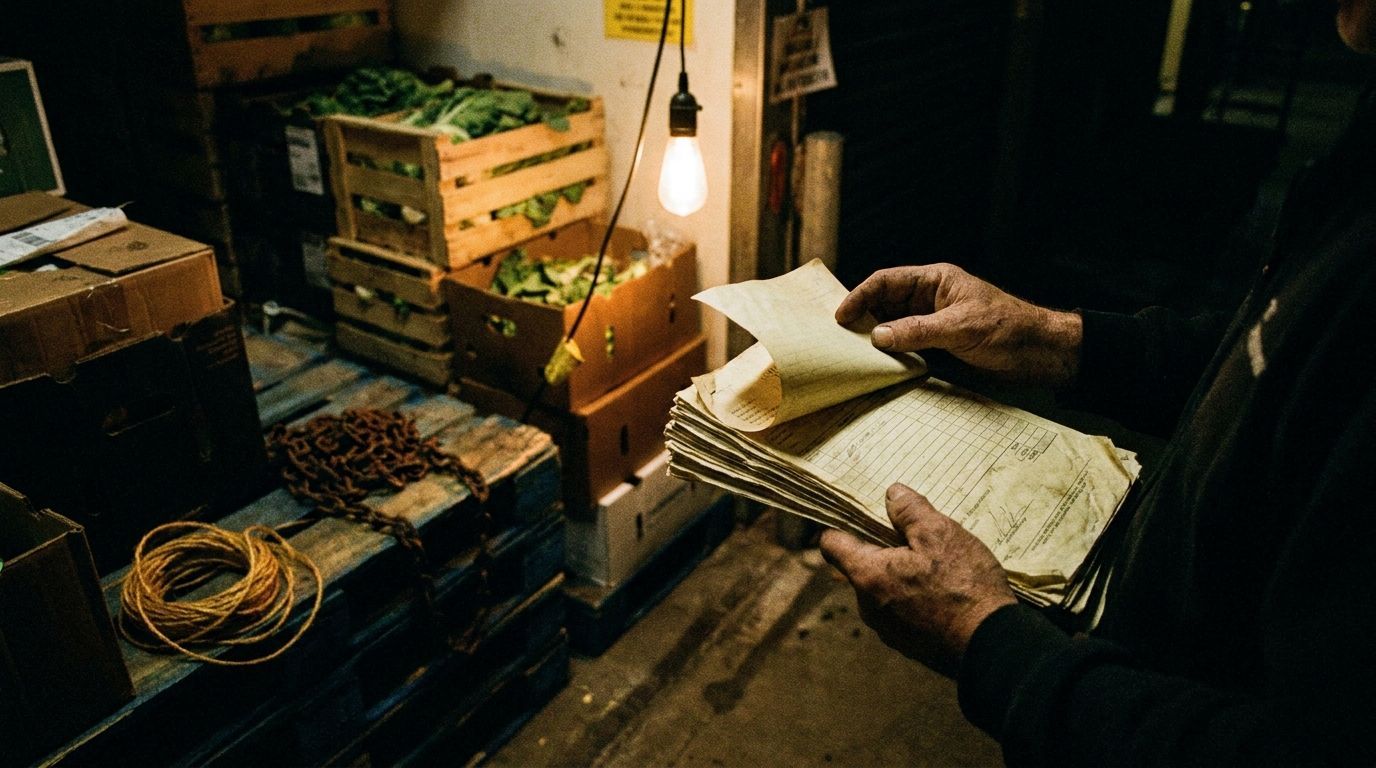
Your receiving staff are doing their jobs. They check deliveries, sign off on invoices, move on. The problem is that the invoices they're approving may contain errors at a rate that would alarm you if you saw it written down, and the way human attention works makes those errors nearly invisible to anyone checking by hand.
In brief: Invoice price variance is the gap between what a supplier agreed to charge you and what actually appears on the invoice. According to QSR Magazine's analysis of 93 million data points, invoice overcharges are far more common than most operators expect, with a significant share of overbilled lines running well above the contracted price. Manual invoice checking fails because attention drifts when most lines look correct: when the majority of lines are clean, reviewers stop scrutinizing the rest. Automated checking catches what human attention misses by flagging every line against the agreed price, every time.
Invoice price variance is the difference between the price a supplier agreed to charge for a specific item and the price that actually appears on the invoice you receive.
That definition sounds simple. The dollar amounts it represents are not.
---
The Math Behind Why Manual Checking Fails
Think about what your receiving team actually faces. A typical produce or protein invoice has dozens of line items. Most of them are right. The person checking it has other things to do, has checked hundreds of invoices before this one, and has no particular reason to expect a problem on line 34 of a 47-line document.
This is a probability problem, not a people problem. When the majority of lines are correct, the human brain starts treating the document as correct. Pattern recognition, the same skill that makes experienced operators good at their jobs, works against you here. The errors that cost you money are hiding inside a document that looks, at a glance, like every other invoice you have ever approved.
The result is that overcharges get paid, and they get paid regularly. According to QSR Magazine's analysis of 93 million data points, invoice overcharges are a widespread and recurring problem across supplier types and restaurant sizes. That is not a rounding error. That is a supplier charging you more than your contract specifies, and your team signing off on it because the rest of the invoice looked fine.
---
What Automatic Checking Actually Does Differently
Automated invoice price variance checking runs a fundamentally different process from what your receiving team already does.
A person checking an invoice compares what they see against what they remember, or at best against a paper contract they may or may not have in front of them. An automated system compares every single line against the agreed price in real time, with no attention drift, no memory gaps, and no pressure to move on to the next task.
The comparison looks like this:
- Manual review: Fast, low-friction, catches obvious errors (wrong item, missing line), misses price discrepancies because the reviewer has no live reference for every contracted price on every product line from every supplier.
- Automated checking: Slower to set up, requires your contracted prices to be loaded and maintained, but catches every price discrepancy on every line, every time, regardless of invoice length or how busy the day is.
The tradeoff is real. Automated systems require upfront work to populate contracted prices and keep them current when your supplier agreements change. That is not a trivial ask for a 10-location operation managing multiple suppliers. But the alternative is paying overcharges on a meaningful share of invoices indefinitely.
---
Why Multi-Unit Operators Feel This More Than Single Locations
If you run two locations, a missed overcharge on a chicken delivery costs you twice. If you run ten, it costs you ten times. The math is obvious, but the operational reality is more complicated than that.
At scale, you almost certainly have a purchasing arrangement that is supposed to give you better prices than a single-location competitor. The assumption is that buying more volume earns you lower costs. The data does not support that assumption as reliably as most operators believe. The same QSR Magazine analysis found that larger buyers paid less than smaller buyers for the same product from the same supplier only 43.3% of the time. They paid more 33.9% of the time.
That means your volume discount may not be materializing the way you think it is, and if your invoices are not being checked automatically against contracted prices, you have no reliable way to know. You are operating on the assumption that your purchasing agreement is being honored, without the verification to confirm it.
This matters right now because costs need to be as tight as you can make them. According to Revenue Management Solutions, QSR traffic was down 1.4% year over year in July 2026 even as net sales rose 1.4%, meaning operators are selling to fewer customers at higher prices. Guest counts are under pressure, and paying what you actually agreed to pay is one of the more direct levers available to you.
---
What You Can Do This Week
You do not need a new system to start understanding your exposure. Pull three months of invoices from your two or three highest-spend suppliers. Pick five items you buy consistently, items where you know the contracted price. Check every line for those items across every invoice in the sample.
What you find will tell you whether you have a problem worth solving systematically. If your error rate is significant, the annual dollar amount across your locations is probably large enough to justify building a real process around it. If your rate is lower, you will at least know that, which is more than most operators running in your range currently know.
The operators who act on this first are the ones who already suspect their invoice approval process is more of a formality than a check. If that description fits your operation, it is worth looking at platforms built to automate this kind of price verification across multiple locations and suppliers (the Ticket platform is one option). The broader point stands regardless of what tool you use: verifying invoices against contracted prices is a concrete, repeatable process, and the operators who build that process stop paying for errors they currently have no way to see.
---
Frequently asked questions
What is invoice price variance in a restaurant?
Invoice price variance is the difference between the price a supplier agreed to charge for an item and the price that actually appears on the invoice. It can occur due to supplier error, system glitches, or pricing updates that were not applied correctly. In restaurants, it shows up most often on high-frequency purchases like proteins, produce, and dairy, where prices fluctuate and contracted rates can be overlooked by both parties.
How common are invoice overcharges in restaurants?
More common than most operators expect. An analysis of 93 million data points, reported by QSR Magazine, found that invoice overcharges are a widespread and recurring problem across supplier types and restaurant sizes, meaning it is not a problem limited to small operators or specific categories. To understand your own exposure, the most reliable approach is to audit a sample of your own invoices against your contracted prices.
Why does manual invoice checking miss overcharges?
Human attention drifts when most lines on a document are correct. When the majority of invoice lines match expectations, reviewers tend to approve the document without scrutinizing every remaining line against a contracted price reference. Manual checking also relies on the reviewer having the correct contracted price in memory or on hand, which is rarely the case for every item across every supplier.
Does buying in higher volume protect you from invoice overcharges?
Not reliably. A 93-million-data-point analysis reported by QSR Magazine found that larger buyers paid less than smaller buyers for the same product from the same supplier only 43.3% of the time. They paid more 33.9% of the time. Volume purchasing agreements do not automatically mean invoices reflect those agreements accurately, which is why verification matters regardless of your purchasing scale.
What is the fastest way to find out if my invoices have overcharges?
Pull three months of invoices from your highest-spend suppliers. Identify five to ten items you buy consistently and for which you know the contracted price. Check every invoice line for those items against the contracted rate. The gap between what you agreed to pay and what you actually paid will tell you whether your exposure is significant enough to warrant a systematic fix.